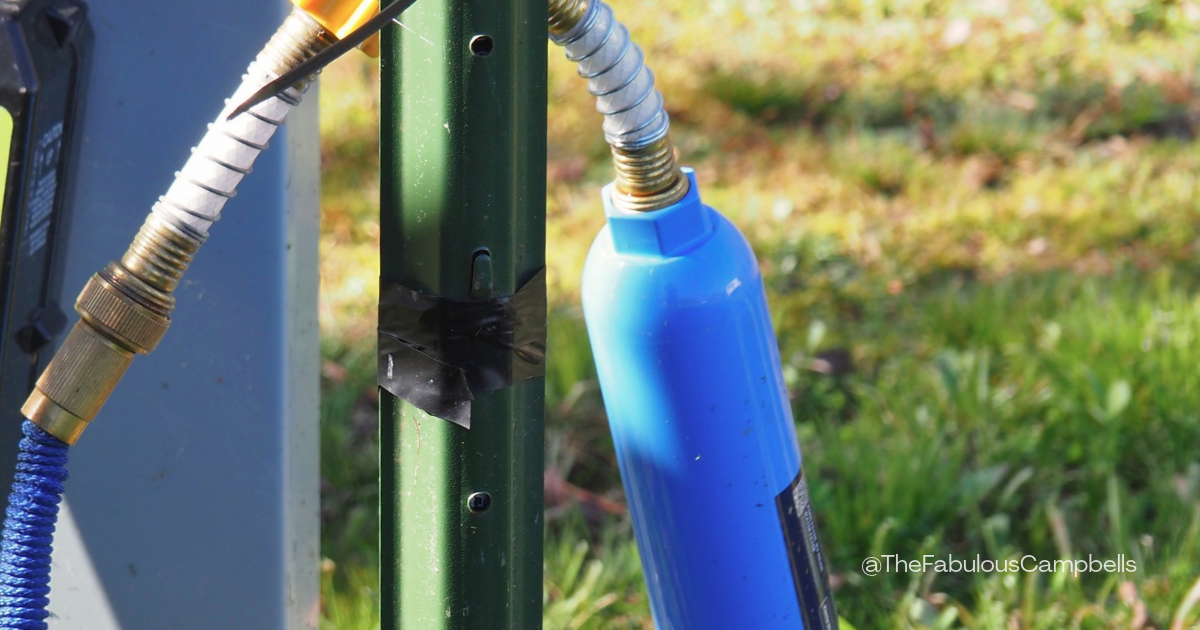
Before we get hot and heavy into water filters, a quick full-disclosure moment: Jennifer and I only write about gear we actually use. In the case of the blue Camco filter, we’ve used it for years. If we haven’t logged real miles with a product and can’t give you our honest, unfiltered thoughts, we won’t waste your time with a post. Also, if you click an Amazon link here and buy something, we earn a small commission. It helps fund our adventures (and keeps the campfire burning), so we truly appreciate the support!
Have you ever taken a stroll through a campground and noticed those long blue tubes dangling off the water spigots? If you’re newer to the RV lifestyle, you might have wondered what on earth those things are and why almost every camper has one attached.
Those blue torpedoes are inline water filters. A huge chunk of campgrounds run on well water, which often comes with a distinct metallic twang, a hit of rust, or a heavy whiff of sulfur. Enter a simple, inexpensive solution like the Camco TastePURE RV Water Filter—they run around $20 on Amazon.
After hauling our rig all over Minnesota, the Camco filter has always reliably handled our water setup. Now that we’re at a seasonal site, we had the perfect chance to do a side-by-side comparison. Running water directly from the spigot without the filter yields a noticeable sulfur scent. It isn’t full-on “Holy crap, who pooped their pants?” status—it’s more of a quick, sneaky “toot.” Could Jennifer and I survive a weekend with it if we had to? Sure. But why suffer when you don’t have to?
Pass that same water through the filter, and the funk completely vanishes. The water becomes crisp, clean, and totally drinkable. We use it for everything: filling the ice maker, mixing up cocktail mixers and drink powders, cooking, and making morning tea. Plus, it barely impacts your water pressure, which makes washing dishes fabulous.
Most of these filters come with a short flexible hose protector (a hose saver) to take strain off your spigot connection. I’ll be totally honest: I’ve used them for years, but I’ve seen RVers get into heated online debates swearing by—or utterly despising—these little flexible hoses. If it makes sense for your setup, use it. If not? Who cares. I’m sure the comment section will let me know either way!
Here’s the fancy breakdown straight from Camco’s Amazon listing: “This RV inline filter reduces bad tastes, odor, chlorine, sediment, etc. GAC filtration, combined with KDF, controls bacteria & mold growth when the outdoor water filter isn’t in use.”
Does it knock out bad tastes, chlorine, and funky smells? Absolutely, 100%. As for the laboratory chemistry of GAC and KDF? We’re camper folks, not lab scientists, so we’ll leave the high-school chemistry breakdown to the experts.
A quick heads-up before you buy: check your rig first. Some RVs come equipped with a multi-canister filter system hidden in the underbelly, or even full reverse osmosis (RO) systems. Running an inline filter on top of an existing 3-canister system is overkill.
And as a former craft beer brewer, I have a love-hate relationship with RO water. RO strips everything out of the water. Now, plenty of commercial brewers just rolled over in their graves reading that, because large-scale breweries rely on RO water so they can strip it down and manually dial in their mineral profiles with surgical precision. I’ve always preferred the artsy-fartsy approach: work with the natural water you’ve got—unless it tastes like a rusty nail or smells like a boiled egg.
Bottom line: is an inline water filter necessary? 100% yes. Campground water is always a wild card. Save the unpredictable adventures for the hiking trails—not your morning cup of Joe.
Leave a Reply